
How Getting Mold Help Works
Fort Myers Mold Pros is a free quote and referral service. Here’s what we do, and what typically happens once you hire a Florida-licensed mold assessor or remediator.
Get a Free QuoteOur part: getting you quotes
We connect Fort Myers and Lee County homeowners with Florida-licensed mold assessors and remediators. We don’t do the mold work ourselves.
You send the details
Fill out the quote form or give us a call. Tell us your ZIP code, where you see or smell mold, roughly how large the area is, and what may have caused it, such as a roof leak, AC problem or storm water.
We help you get quotes
We help you get quotes from licensed local pros who work in your area. We usually reply the same day.
You compare and decide
Verify each company’s Florida license at MyFloridaLicense.com, compare what each quote covers, and hire whoever you choose. You’re never obligated to hire anyone.
What typically happens in a licensed mold job
Every home is different, and the licensed professionals you hire set the actual plan. Most mold jobs larger than about 10 square feet follow a similar sequence. Florida Statutes s. 468.8411 defines mold assessment and mold remediation as work on mold growth of “greater than 10 square feet,” which is where Florida’s licensing requirement applies.
This is general information, not legal advice.
Assessment by a licensed mold assessor
A Florida-licensed mold assessor typically inspects the home, looks for moisture with meters and a visual check, and decides whether sampling makes sense. EPA’s mold guide says, “In most cases, if visible mold growth is present, sampling is unnecessary,” so testing is not automatic. The assessor usually documents where the mold is, how large the area is and what likely caused it, which gives remediators a clear scope to quote against.
Fixing the moisture source
Mold returns if the water does. EPA’s guide says, “If you clean up the mold, but don’t fix the water problem, then, most likely, the mold problem will come back.” In Fort Myers homes, common sources include roof leaks, plumbing leaks, AC condensate lines and drain pans, and storm or surge water. A roofer, plumber or HVAC contractor may need to repair the source before or alongside the remediation.
Containment
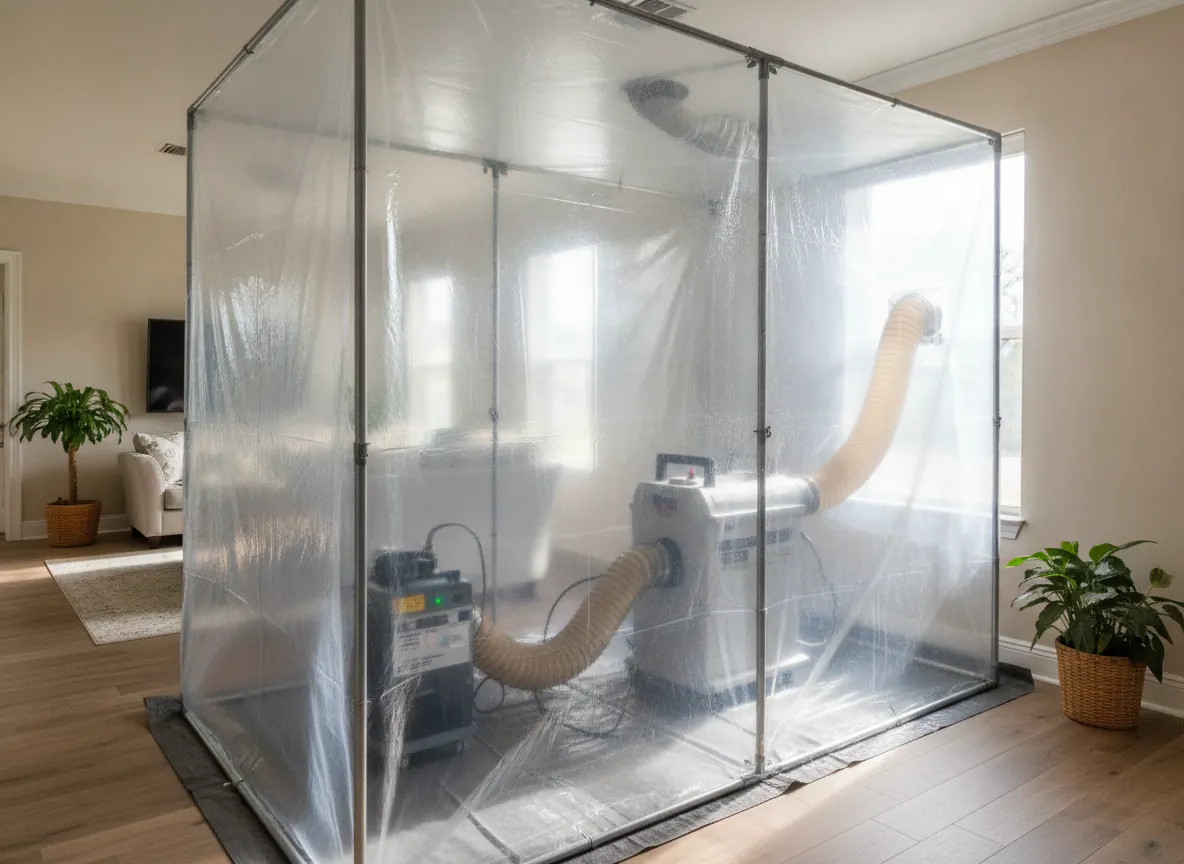
For larger jobs, a licensed remediator typically seals off the work area with plastic sheeting and a zipper door, and runs air scrubbers to keep spores from spreading into clean parts of the home. Vents in the work area are usually covered. How much containment a job needs depends on its size and location.
Removal and cleaning
During remediation, crews typically remove porous materials that can’t be cleaned, such as moldy drywall, insulation, carpet and padding, and bag them inside containment. Hard surfaces and framing are cleaned, and the area is usually HEPA-vacuumed. HVAC components or attic decking may need specialized work.
Drying
Dehumidifiers and air movers typically run until materials reach normal moisture levels. EPA’s guide says, “It is important to dry water-damaged areas and items within 24–48 hours to prevent mold growth.” In Fort Myers’ humidity, where morning relative humidity averages 88%, drying equipment does a lot of the work.
Clearance testing
After cleaning and drying, many homeowners hire a licensed mold assessor to check the area before containment comes down and walls are closed. Clearance testing is often a separate cost, since remediation quotes may not include it, and the 12-month rule typically means it comes from a different company than the remediator.
Rebuild
Once the area is clear and dry, the removed drywall, insulation, trim, paint and flooring are replaced. Some remediation companies include rebuild work and others don’t, so check each quote. Rebuild work may need permits depending on your city or county.
Florida’s 12-month rule: why there are usually two companies
Florida Statutes s. 468.8419 says a mold assessor may not perform or offer mold remediation on a structure the assessor or the assessor’s company assessed within the last 12 months. It also says a remediator may not perform or offer an assessment on a structure it remediated within the last 12 months. The statute exempts a certified contractor classified as a Division I contractor under s. 489.105(3).
In practice, the company that assesses your home and the company that remediates it are typically separate. That’s why you may get one quote for the assessment and clearance testing and another for the remediation. This is general information, not legal advice. Read more in Florida’s 12-month rule explained.
Tips before you hire
- Ask for the Florida license number of the person doing the work and verify it at MyFloridaLicense.com. DBPR licenses individuals, not businesses.
- Ask what each quote includes: containment, removal, drying, clearance testing and rebuild.
- Ask how the moisture source will be found and who will fix it.
- EPA’s guide suggests you “make sure the contractor has experience cleaning up mold.”
- If anyone in the home has health concerns, talk to a doctor.
See typical prices in the mold remediation cost guide, learn about mold inspection and testing and mold removal, or browse the mold FAQ.
Seeing or smelling mold? Get a clear plan.
Free, no-pressure quotes across Fort Myers, Cape Coral, Lehigh Acres, Bonita Springs and the rest of Lee County.