
Storm & Water Damage Mold in Lee County
After a hurricane, flood or burst pipe, the clock starts fast. We connect Lee County homeowners with Florida-licensed mold assessors and remediators. Tell us what happened and we'll help you get quotes from licensed local pros.
Get a Free Quote Call (727) 300-6656Why water damage turns into mold so often here
Lee County has taken three major storm-surge events in recent years. According to the National Hurricane Center's report, Hurricane Ian made landfall on Cayo Costa, a Lee County barrier island, on September 28, 2022, as a Category 4 storm. Peak surge reached 10 to 15 feet above ground level on Fort Myers Beach, 9 to 13 feet on eastern Sanibel, 6 to 9 feet around Cape Coral and Pine Island, and 5 to 8 feet in Fort Myers along the Caloosahatchee. NHC counted at least 52,514 structures impacted in Lee County, 5,369 destroyed and 14,245 with major damage.
Two years later, Hurricane Helene passed offshore in September 2024 and pushed 3 to 5 feet of surge from south of Englewood to Bonita Beach, with the Fort Myers gauge on the Caloosahatchee reading 5.12 feet above MHHW. Hurricane Milton, which made landfall at Siesta Key in October 2024, brought 4 to 6 feet of surge from south of Boca Grande through Bonita Beach, including the Caloosahatchee River.
Every one of those events soaked drywall, insulation, flooring and cabinets. Add Fort Myers' summer wet season, when NOAA normals show about 78% of the year's 57.41 inches of rain falls from May through October, and storm-related mold is a recurring problem, not a one-time one.
What licensed pros typically do after water damage
EPA's mold guide is direct: “It is important to dry water-damaged areas and items within 24-48 hours to prevent mold growth.” When that window has passed, or the wet area is large, the work usually splits into assessment and remediation.
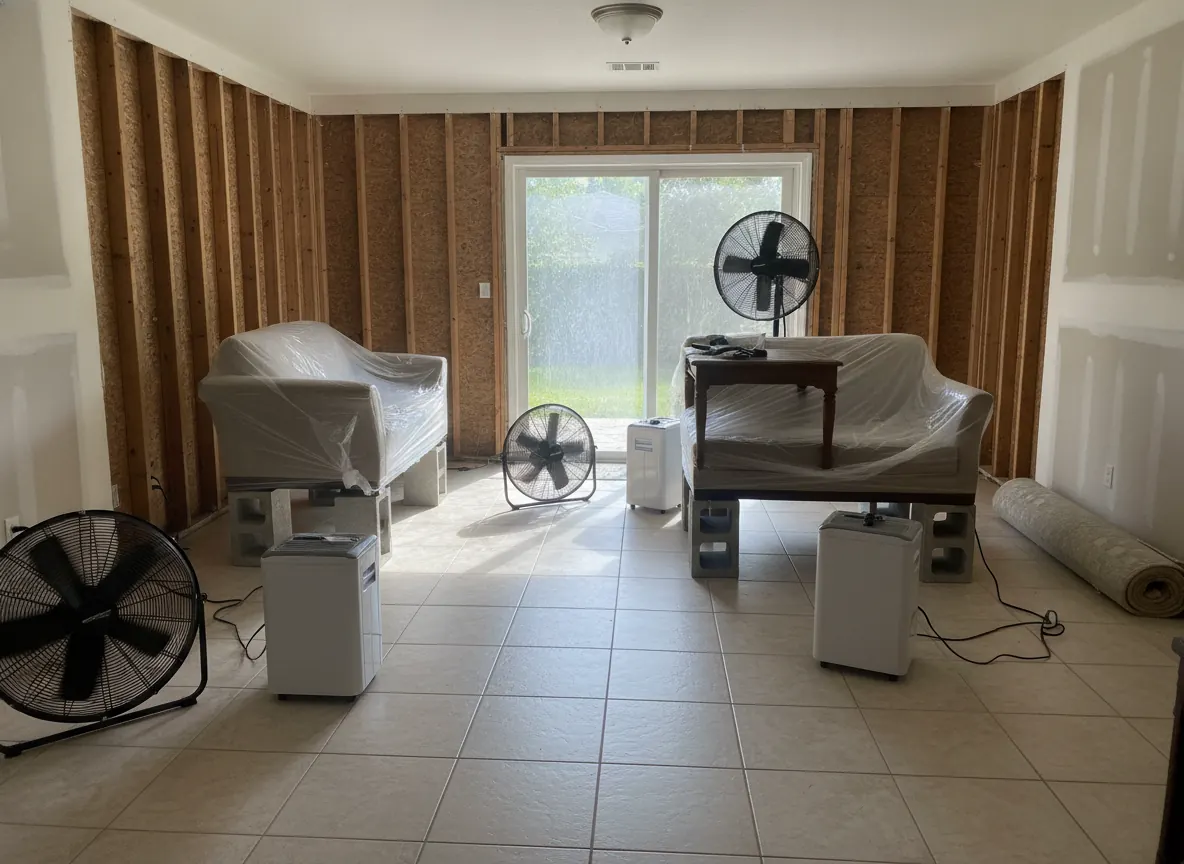
A licensed assessor typically measures moisture across walls and floors, identifies where water traveled and documents existing growth. A licensed remediator then contains the affected rooms, removes wet or moldy porous materials such as the lower section of drywall and insulation, cleans the remaining framing and runs dehumidifiers and air movers until the structure is dry. Rebuild comes only after the materials test dry.
Ask any company for its Florida license number and verify it at MyFloridaLicense.com before signing.
What to do after a storm or leak
See the full remediation process for each stage in detail.
Stay safe, then document
Once it's safe to enter, photograph water lines, damaged materials and contents before anything is removed. Your insurer will want them.
Stop the water and start drying
Remove standing water, open the home if outdoor air is drier, and run fans or dehumidifiers if you have power. EPA's target is 24–48 hours.
Request quotes
Use the free quote form to tell us what happened. We connect you with Florida-licensed assessors and remediators who serve your area.
Assessment
A licensed assessor maps moisture and growth and writes a scope, typically as a separate company from the remediator under Florida's 12-month rule.
Remediation and drying
Crews contain, remove, clean and dry. Repairs to the roof or plumbing that caused the water are handled too, often by a separate trade.
Clearance and rebuild
Many homeowners have a separate assessor confirm the area is dry and clean before new drywall goes up.
Lee County's 50% rule and mold remediation
Unincorporated Lee County participates in FEMA's National Flood Insurance Program. Its substantial improvement / substantial damage package (the “50% rule,” last revised July 2026) requires county staff to review repair permits on structures in the FEMA Special Flood Hazard Area. Repairs are limited to 50% of the structure's pre-event value, excluding land; going over means the structure is “Substantially Damaged” and must be brought into full compliance. The rule applies to damage from any event, including flood, wind and fire.
Two details matter for mold work. Drywall and insulation are listed as costs that must be included in the 50% review. Mold remediation and post-flood cleanup are not: the county states, “Demolition does not refer to post event clean up or mold remediation.” If a structure already meets current flood regulations, such as elevation, the 50% rule does not apply. The Town of Fort Myers Beach says structures throughout the town are in the special flood hazard area and enforces the FEMA 50% rule at plan review. Other cities may differ, so check with your local building department.
This is general information, not legal advice.
What storm-related mold remediation costs
| Item | Typical range |
|---|---|
| Per square foot of affected area | $10–$30 |
| Large area (~500 sq ft) | $5,000–$15,000 |
| Whole house / ~1,000 sq ft | $10,000–$30,000 |
Typical national ranges from cost guides, 2025–2026 — not quotes. Storm jobs vary widely with how much material got wet. Remediation quotes may not include inspection or clearance testing (This Old House). Compare more ranges in the mold remediation cost guide.
Related help
For a deeper checklist, read mold after a hurricane or flood in Lee County. If water came through the roof, see attic mold; if you live in a condo, see condo & HOA mold. General removal steps are on the mold removal page. If anyone in the home has health concerns after water damage, talk to a doctor.
Storm & water damage mold FAQ
How fast does mold grow after a flood or hurricane?
EPA's mold guide says, “It is important to dry water-damaged areas and items within 24-48 hours to prevent mold growth.” In Fort Myers, where morning humidity averages 84% to 91% every month, wet drywall, insulation and carpet pad that stay damp past that window are at real risk. Remove standing water and start drying as soon as it is safe to do so.
Does mold remediation count toward Lee County's 50% rule?
Not under unincorporated Lee County's substantial damage review package (revised July 2026), which says, “Demolition does not refer to post event clean up or mold remediation.” Drywall and insulation replacement costs are counted, though. Cities and towns may run their own reviews, so check with your local building department. This is general information, not legal advice.
Should I cut out wet drywall myself?
Removing standing water and wet contents quickly helps, but cutting out large areas of moldy drywall is mold remediation under Florida law when it exceeds about 10 square feet, which generally requires a licensed remediator. Photograph everything before you remove it for insurance purposes, and avoid disturbing visible mold without protection. Anyone with health concerns should talk to a doctor.
Will insurance pay for mold after a storm?
Coverage depends on your specific policy, whether the loss was flood or wind, any mold limits or exclusions, and how quickly the damage was reported and mitigated. Read your policy and talk to your agent or adjuster before work starts. Keep photos, receipts and the written scopes from your assessor and remediator to support the claim.
Do I need a mold assessment before storm cleanup?
Not always. EPA notes that when mold is visible, sampling is often unnecessary. An assessment is useful when water reached inside walls, the affected area is large, an insurance claim needs documentation, or you want an independent clearance check afterward. Under Florida's 12-month rule, the assessor is typically a different company from the remediator.
Seeing or smelling mold? Get a clear plan.
Free, no-pressure quotes across Fort Myers, Cape Coral, Lehigh Acres, Bonita Springs and the rest of Lee County.