
AC & HVAC Mold in Southwest Florida
Musty air when the AC kicks on, or dark spots around the vents? We connect Southwest Florida homeowners with Florida-licensed mold assessors and remediators. Tell us what you're seeing and we'll help you get quotes from licensed local pros.
Get a Free Quote Call (727) 300-6656Why AC systems grow mold in Southwest Florida
In Fort Myers, air conditioning isn't optional, and it doubles as the home's dehumidifier. FSU's Florida Climate Center reports Fort Myers averages 88% relative humidity in the morning and 55% in the afternoon, with September the most humid month at 91% in the morning. NOAA's 1991–2020 normals show Page Field averages about 120 days a year at 90°F or hotter. That means the system is pulling a steady stream of water out of the air for most of the year.
All that water has to go somewhere. It condenses on the cooling coil, drips into a drain pan and leaves through a condensate line. When the line clogs, the pan rusts or overflows, the unit short-cycles without fully drying the air, or cold supply ducts sweat in a hot attic, surfaces inside the system stay damp. Dust in the air handler and ducts gives mold something to feed on.
Common warning signs:
- A musty smell that gets stronger when the system starts
- Dark spots on supply vent covers or the ceiling around them
- Water in or around the air handler closet, or a stained drain pan
- Visible growth on the coil, blower or inside the cabinet
- Indoor humidity that stays high even with the AC running
What licensed pros typically do with HVAC mold
HVAC mold usually involves two trades. An HVAC contractor diagnoses the moisture problem: drain lines, pan condition, coil, refrigerant charge, system sizing, duct leaks and insulation. A licensed mold assessor can document how far growth extends through the air handler, ducts and nearby drywall, and write a scope.
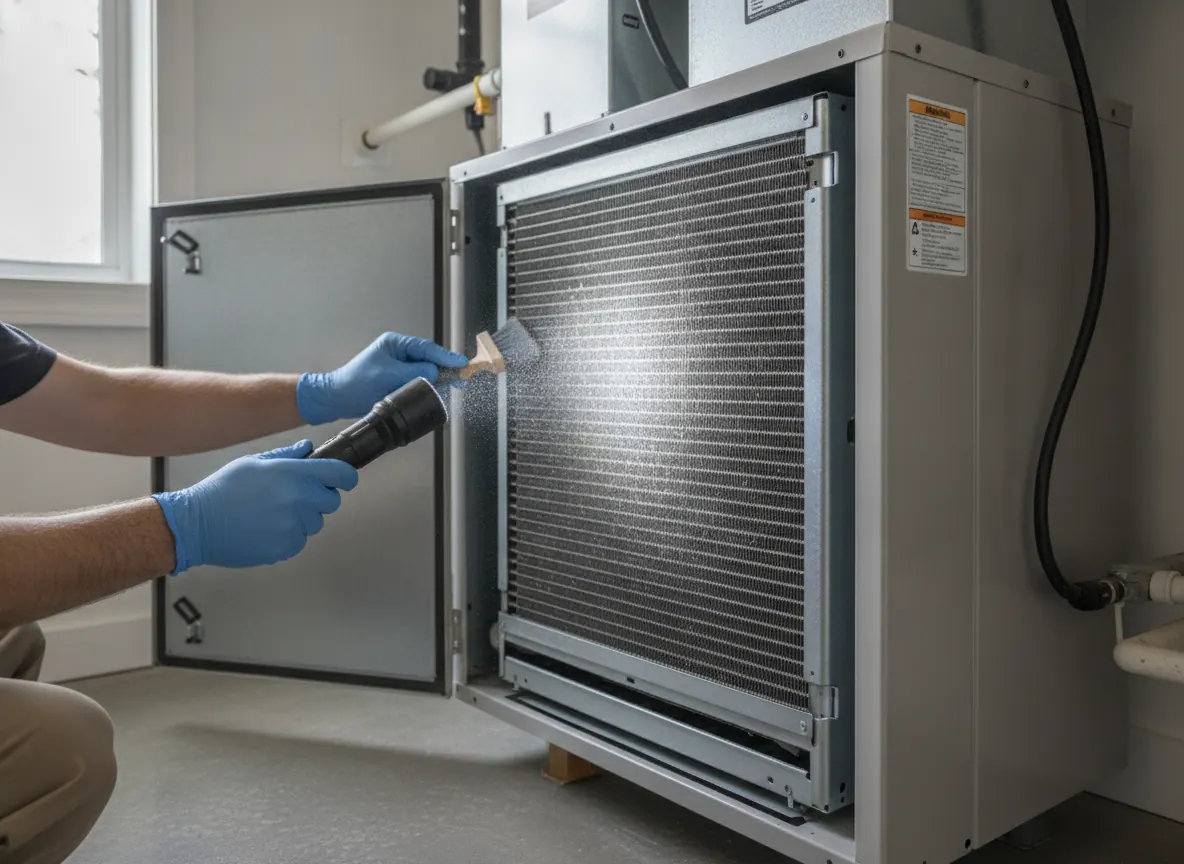
A licensed remediator then works from that scope. Crews typically isolate the air handler closet and the supply and return openings, clean or replace contaminated components, address affected ductwork (cleaning some types, replacing others such as contaminated flex duct or duct board), and remove moldy drywall around the closet if needed. HEPA filtration runs during the work, and the system stays off until it's done.
Ask any company for its Florida license number and verify it at MyFloridaLicense.com.
Typical steps for AC and HVAC mold
The process page covers containment and clearance in more detail.
Check the simple things
Replace the filter and make sure the condensate line is draining. Don't spray household cleaners into the air handler or ducts.
Request quotes
Use the free quote form to describe the smell, spots or water. We usually reply the same day and help you get quotes from licensed local pros.
Assessment
A licensed assessor inspects the air handler, ducts and nearby surfaces and writes a scope. Under Florida's 12-month rule, this is typically a separate company from the remediator.
Fix the moisture cause
EPA's mold guide warns that if you clean up the mold but don't fix the water problem, the mold problem will most likely come back. An HVAC contractor handles drains, coils and duct sealing.
Remediation
The remediator contains the area, cleans or replaces contaminated parts and ducts, and removes affected drywall.
Clearance
Many homeowners have a separate assessor confirm the work before the system goes back to normal use.
What HVAC mold remediation costs
| Item | Typical range |
|---|---|
| HVAC system and ducts | $3,000–$10,000 |
| Mold inspection | $450–$800 (national avg about $500; Florida avg about $739) |
| Small area (~50 sq ft), such as an AC closet wall | $500–$1,500 |
Typical national ranges from cost guides, 2025–2026 — not quotes. Remediation quotes may not include inspection or clearance testing (This Old House), and HVAC repairs are usually priced separately. See the mold remediation cost guide for more.
Related help
Learn more in our post on mold in AC vents in Southwest Florida. If ducts run through a damp attic, see attic mold. To understand what an assessor does, read mold inspection & testing. If anyone in the home has health concerns, talk to a doctor.
AC & HVAC mold FAQ
Why do I have mold in my AC vents?
Air conditioners pull moisture out of the air, and that water collects on the cooling coil and drains through a pan and line. In Fort Myers, where morning humidity averages 88%, systems run hard most of the year. A clogged drain, oversized unit, leaky ducts in a hot attic or condensation on vent covers can keep surfaces damp long enough for mold to grow.
What should I do about mold in my AC unit?
Start by checking the condensate drain and changing the filter, and avoid spraying cleaners into the air handler yourself. If growth is on the coil, in the cabinet or inside ductwork, ask an HVAC contractor to find the moisture cause and consider a licensed mold assessor to document how far it extends before a licensed remediator scopes the cleanup.
Can mold in an AC unit make you sick?
We can't give medical advice. EPA's mold guide is a good general reference on mold and moisture, and anyone with symptoms or health concerns should talk to a doctor. What we can say is that the AC system moves air through the whole home, which is why many homeowners choose to address HVAC mold promptly once it is found.
How much does HVAC mold remediation cost?
Cost guides put mold remediation for a whole HVAC system and its ducts at about $3,000 to $10,000. That is a typical national range, not a quote. The price depends on whether ducts can be cleaned or must be replaced, how accessible the air handler is, and whether mold has spread to nearby drywall. Remediation quotes may not include inspection or clearance testing.
Is mold in AC vents common in Southwest Florida?
The local climate makes it more likely, because it keeps systems working hard. NOAA normals show about 120 days a year at or above 90°F at Fort Myers Page Field, and morning humidity stays between 84% and 91% every month. Spots on supply vent covers are often surface condensation, but recurring growth points to a moisture issue worth checking.
Seeing or smelling mold? Get a clear plan.
Free, no-pressure quotes across Fort Myers, Cape Coral, Lehigh Acres, Bonita Springs and the rest of Lee County.