
Mold Removal in Fort Myers & Lee County
We connect Fort Myers and Lee County homeowners with Florida-licensed mold remediators. Tell us what you're seeing and we'll help you get quotes from licensed local pros for removal, cleanup and drying.
Get a Free Quote Call (727) 300-6656When mold removal needs a licensed pro
Southwest Florida's climate keeps building materials close to the edge. NOAA's 1991–2020 normals show Fort Myers Page Field gets 57.41 inches of rain a year, with about 78% of it falling from May through October. FSU's Florida Climate Center reports morning humidity of 84% to 91% in every month. When drywall, carpet pad, cabinets or framing stay wet, mold can follow within days.
Wiping visible growth off a wall rarely solves the problem. Mold that has rooted into porous material like drywall or insulation generally has to be removed, and spores disturbed during that work can spread into clean rooms if the area isn't contained. That's the difference between a cleanup and a remediation.
Size matters too. EPA's mold guide says that if the moldy area is less than about 10 square feet (about 3 ft by 3 ft), homeowners can usually handle it themselves. Above that, Florida law treats the work as mold remediation, which generally requires a state-licensed remediator. Our post on Florida's 10 square foot rule explains the details.
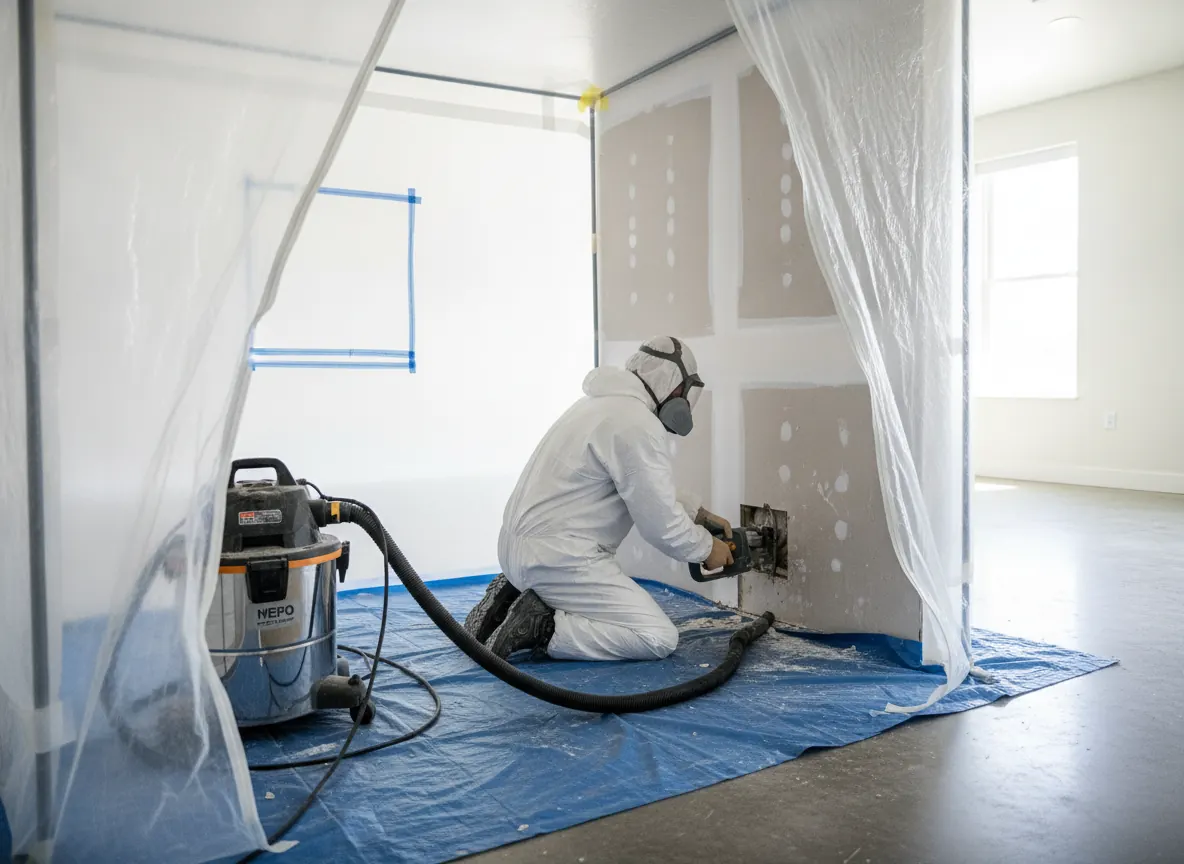
What a licensed remediator typically does
Florida Statutes s. 468.8411 defines “mold remediation” as “the removal, cleaning, sanitizing, demolition, or other treatment, including preventive activities, of mold or mold-contaminated matter of greater than 10 square feet that was not purposely grown at that location.”
On a typical job, a licensed remediator works from an assessment or scope, isolates the affected area with plastic sheeting and a zippered entry, and runs air scrubbers to keep spores from moving through the home. Crews then remove mold-damaged porous materials, clean and treat what can stay, bag debris for disposal and dry the structure with dehumidifiers and fans before anything is rebuilt.
EPA's mold guide recommends that you “make sure the contractor has experience cleaning up mold.” Ask any company for its Florida license number and verify it at MyFloridaLicense.com.
Typical mold removal steps
For the detailed walkthrough, see the mold remediation process page.
Find and fix the moisture source
EPA's mold guide warns: “If you clean up the mold, but don't fix the water problem, then, most likely, the mold problem will come back.” Roof, plumbing or AC repairs are often handled by a separate trade.
Containment
Crews typically seal the work area with plastic sheeting and set up negative air pressure so spores stay inside the work zone.
Removal
Mold-damaged drywall, insulation, carpet pad and similar porous materials are cut out, bagged and removed.
Cleaning
Remaining surfaces such as framing are cleaned, and HEPA vacuuming and air filtration reduce settled spores.
Drying
Dehumidifiers and air movers bring materials back to normal moisture levels before rebuild.
Clearance
Many homeowners have a separate licensed assessor confirm the area is dry and the scope was completed before walls are closed.
Assessment and remediation are usually separate
Under Florida Statutes s. 468.8419, a remediator may not perform or offer an assessment on a structure it remediated within the last 12 months, and an assessor may not remediate a structure it assessed in that window. Division I certified contractors are exempt under the statute. So the assessor and remediator are typically separate companies, which gives you an independent scope going in and an independent check at the end. Learn more about the 12-month rule.
This is general information, not legal advice.
What mold removal costs
| Item | Typical range |
|---|---|
| Mold remediation, typical job | $1,200–$3,750 (This Old House avg about $2,300); Fixr avg about $3,500 |
| Per square foot of affected area | $10–$30 |
| Small area (~50 sq ft) | $500–$1,500 |
| Medium area (100–200 sq ft) | $1,000–$6,000 |
Typical national ranges from cost guides, 2025–2026 — not quotes. Remediation quotes may not include inspection or clearance testing (This Old House). See the full mold remediation cost guide for large and whole-house ranges.
Related help
Not sure how big the problem is? Start with mold inspection & testing. If the mold followed a hurricane or leak, see storm & water damage mold. For growth in the roof space, read attic mold. If anyone in the home has health concerns, talk to a doctor.
Mold removal FAQ
Do you need a license for mold removal in Florida?
Florida Statutes s. 468.8411 defines “mold remediation” as the removal, cleaning, sanitizing, demolition or other treatment of mold or mold-contaminated matter of greater than 10 square feet. Work above that threshold generally requires a state-licensed mold remediator. DBPR licenses individuals, not businesses. Verify any company's license at MyFloridaLicense.com. This is general information, not legal advice.
Can I remove a small patch of mold myself?
EPA's mold guide says that if the moldy area is less than about 10 square feet, roughly a 3 ft by 3 ft patch, homeowners can usually handle the job themselves. Larger areas, mold inside walls or HVAC systems, and growth after sewage or flood water are better left to a licensed remediator. Anyone with health concerns should talk to a doctor first.
Will mold come back after removal?
It can, if the moisture problem isn't fixed. EPA's mold guide says, “If you clean up the mold, but don't fix the water problem, then, most likely, the mold problem will come back.” That is why a good remediation scope names the water source, such as a roof leak, plumbing failure or AC condensation issue, and why that repair is often a separate trade.
How long does mold removal take?
Timing depends on how much material is affected, how wet the structure is and whether walls, ceilings or HVAC components must be opened. A small, contained area may take a day or two, while larger jobs need extra drying time before rebuild. Ask each licensed remediator for a written timeline, including drying and any clearance check by a separate assessor.
Does a remediation quote include testing?
Often it does not. This Old House notes that remediation quotes may not include inspection or clearance testing. Under Florida's 12-month rule, assessment is usually done by a separate company from the remediator, so expect two line items. Ask each company exactly what its quote covers, including containment, disposal, drying equipment, cleaning and rebuild.
Seeing or smelling mold? Get a clear plan.
Free, no-pressure quotes across Fort Myers, Cape Coral, Lehigh Acres, Bonita Springs and the rest of Lee County.