
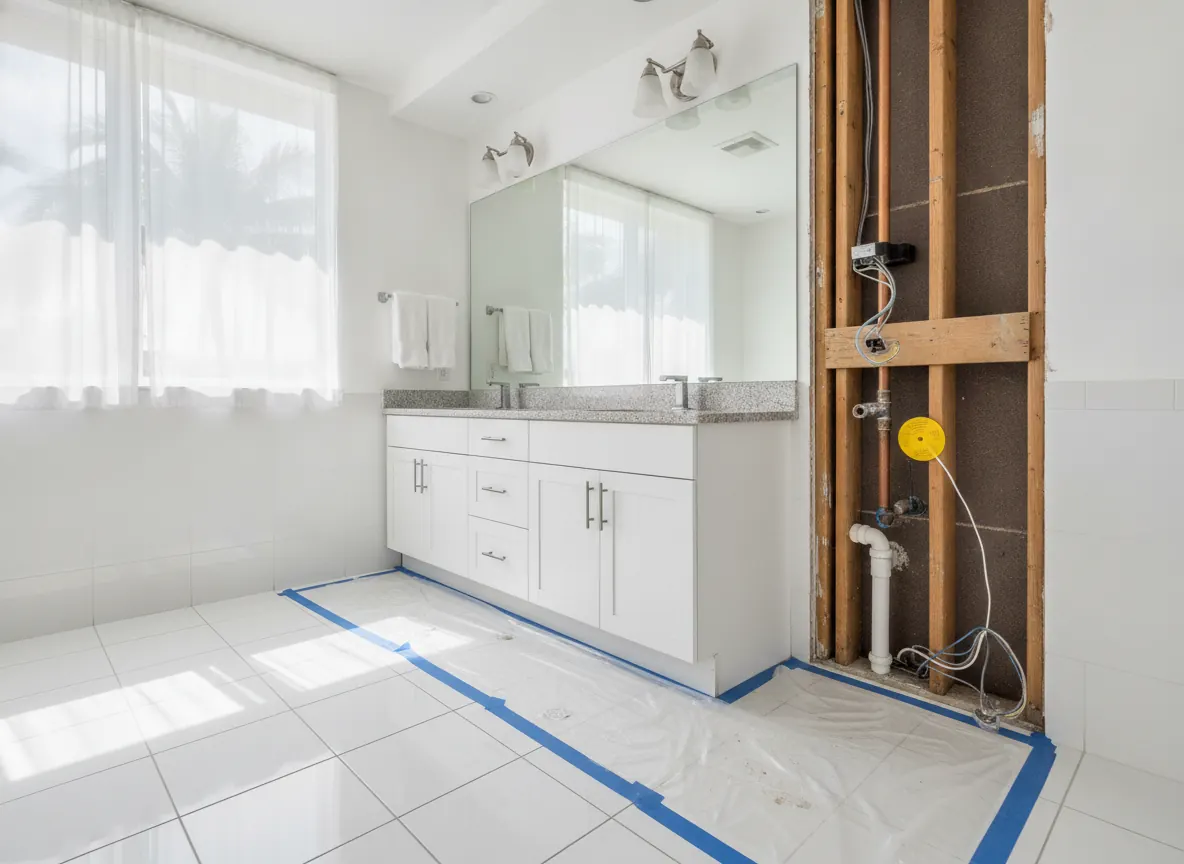
Mold in a condo or HOA community raises a question that mold in a detached house usually does not: whose problem is it? A leak can start in your unit, in the unit above, in a shared pipe, or through the roof or exterior wall. The growth itself may sit inside a wall that is part of the building's common elements. In Fort Myers, Bonita Springs, Estero, Fort Myers Beach and Sanibel, where many condos sit empty for months at a time, a leak can also run for weeks before anyone notices.
This article explains the factors that usually decide who pays, and practical steps to protect yourself. It is general information, not legal advice. Every association and policy is different, and for a specific dispute you should talk to a Florida attorney, your association manager and your insurance agent.
Short answer: it depends on three things
When people ask "who pays for mold remediation in Florida?" the honest answer is that it usually depends on:
Your association documents
The declaration of condominium, bylaws and any rules or maintenance charts typically spell out which parts of the building the association maintains and which parts each owner maintains. Drywall, cabinets, flooring, AC equipment and the pipes inside a wall may be treated differently from one community to the next.
Where the leak started and why
A failed supply line under your sink is a different situation from a roof leak, a leak from the unit above, or water coming through a common exterior wall. The source, and whether it was a maintenance issue, often shapes who is responsible for the repair.
What the insurance policies say
The association usually carries a master policy, and owners usually carry their own unit-owner policy. Each policy has its own coverage terms, exclusions and limits for water damage and mold. What is covered can turn on how the damage happened and how quickly it was reported.
Because all three vary, the same leak can lead to different answers in two different buildings. Do not assume, and do not let anyone else assume for you, until you have read the documents.
Why seasonal condos in Lee County are a special risk
Census data shows how many homes in parts of Lee County sit empty for part of the year. According to the American Community Survey 2024 5-year estimates, homes held for seasonal, recreational or occasional use make up about 48% of all housing units in Fort Myers Beach, 43% in Sanibel, about 32% in Iona, about 30% in Bonita Springs and 28% in Estero, compared with 18% across Lee County as a whole.
An empty unit is where a slow leak does the most damage. A dripping supply line, a clogged AC condensate drain or a leak from the unit above can go unnoticed for weeks. Southwest Florida's climate adds to the risk: the Florida Climate Center reports average morning relative humidity of about 88% in Fort Myers, and EPA's mold guide says "it is important to dry water-damaged areas and items within 24-48 hours to prevent mold growth." A closed-up unit rarely gets dried in that window.
If you own a seasonal unit, practical steps include having someone check the unit regularly while you are away, knowing where your water shutoff is, and reading your association's rules on how the AC must be set during absences. Our guide to mold in AC vents covers why AC systems so often play a part.
Practical steps when you find mold in your condo
Stop the water if you can
Shut off the supply valve to a leaking fixture, or the main valve to the unit, and tell building management right away if the water seems to come from another unit or a common area.
Document everything
Take dated photos and video of the growth, any water stains, the leak source if you can see it, and damaged belongings. Write down when you first noticed it.
Notify the association in writing
Email or a letter creates a record. Ask whether they have a procedure for water and mold reports, and ask for a copy of the relevant maintenance responsibilities from the governing documents.
Call your insurance agent
Report the damage promptly and ask what your unit-owner policy says about water damage and mold. Ask whether the association has opened a master-policy claim.
Don't tear out walls on your own
Opening a wall may be needed, but walls can be association property, and disturbing mold can spread it. EPA says homeowners can usually handle a moldy area smaller than about 10 square feet. Anything larger is generally work for a Florida-licensed mold remediator.
Get an independent assessment if responsibility is disputed
A Florida-licensed mold assessor can document where the growth is and how far it extends, which can help everyone discuss the same facts. Under Florida's 12-month rule (s. 468.8419), the assessor and the remediator are typically separate companies, except for Division I certified contractors as the statute describes.
Get written quotes
Written scopes and prices help the association, insurers and owners compare options. Ask every company for its Florida license number and verify it at MyFloridaLicense.com.
What Florida's mold rules say about the work itself
Whoever ends up paying, Florida law shapes who can do the work. Florida Statutes s. 468.8411 defines mold remediation as "the removal, cleaning, sanitizing, demolition, or other treatment, including preventive activities, of mold or mold-contaminated matter of greater than 10 square feet that was not purposely grown at that location." The DBPR FAQ notes that "only individuals are licensed to perform these services." Our article on the 10 square foot rule explains more. This is general information, not legal advice.
What condo mold work typically costs
Typical national ranges from cost guides, 2025–2026 — not quotes: a typical remediation job runs about $1,200–$3,750 (This Old House average about $2,300), a small area of about 50 square feet $500–$1,500, and a medium area of 100–200 square feet $1,000–$6,000. A mold inspection typically runs $450–$800, with a Florida average around $739. Remediation quotes may not include inspection or clearance testing (This Old House). The real price comes from a licensed pro's on-site assessment. See our condo and HOA mold page and the full cost guide.
Get quotes you can share with your association
Fort Myers Mold Pros is a free quote and referral service. We connect Fort Myers and Lee County homeowners with Florida-licensed mold assessors and remediators. Tell us what you're seeing and we'll help you get quotes from licensed local pros. Request a free quote; we usually reply the same day.
Frequently asked questions
Does the HOA or condo association have to pay for mold?
It depends. Responsibility usually turns on your association's governing documents, where the leak started, and what the master policy and your unit-owner policy cover. The same leak can lead to different answers in different buildings. Read the documents, notify the association in writing, and talk to a Florida attorney for a specific dispute. This is general information, not legal advice.
What if the leak came from the unit above me?
Tell building management right away, in writing, and document the damage with dated photos. Who pays can depend on what caused the leak, the association documents and each owner's insurance. Report it to your own insurer promptly too. An independent assessment by a Florida-licensed mold assessor can help everyone work from the same facts. This is general information, not legal advice.
Can I hire my own mold company in a condo?
Often you can get your own quotes, but check with the association first, because walls, ceilings and some systems may be association property and the documents may set rules for contractors. For mold over about 10 square feet, Florida law generally calls for a licensed remediator. Ask for the license number and verify it at MyFloridaLicense.com.