
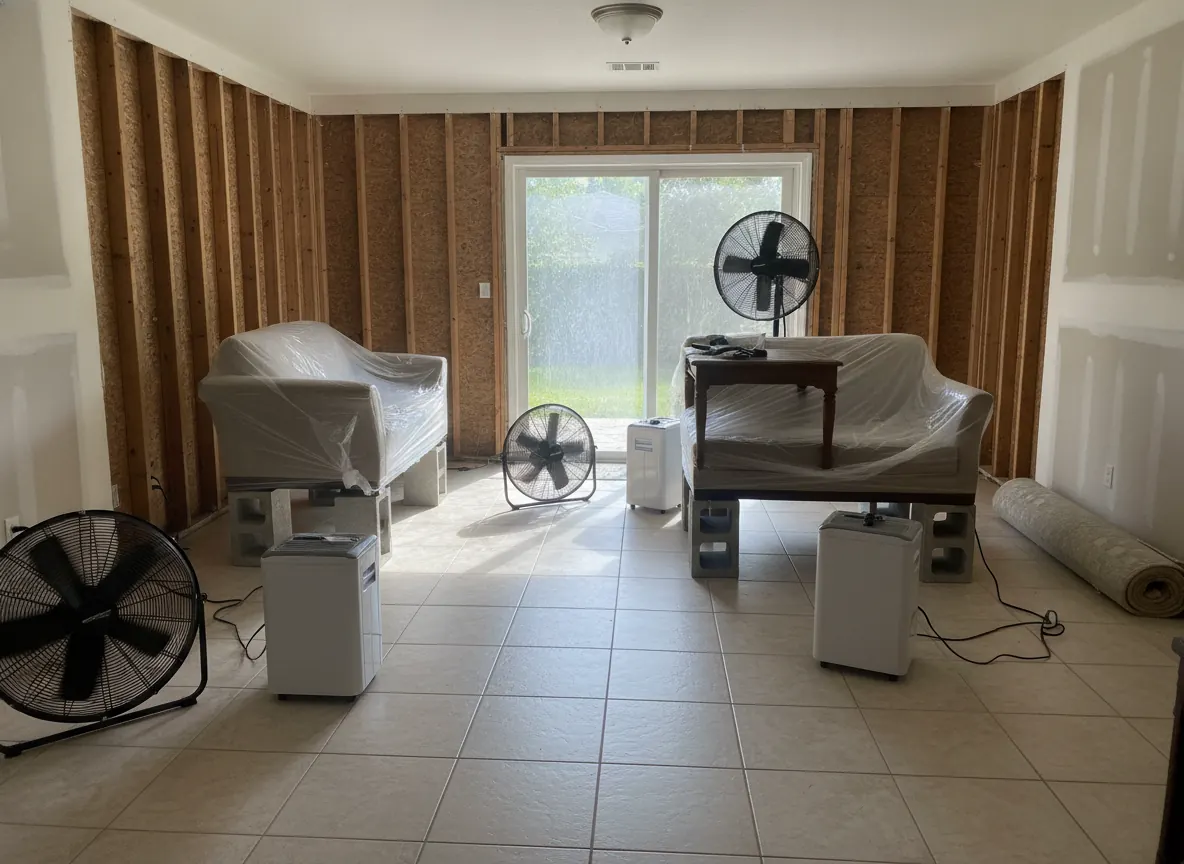
If your home in Fort Myers, Cape Coral, Fort Myers Beach, Sanibel or anywhere else in Lee County took on water from a hurricane or flood, mold is one of the problems that can follow. The steps that matter most in the first two days are mostly about getting wet materials dry.
Safety first: before you think about mold
Mold is rarely the most urgent hazard right after a storm. Before you start pulling up carpet or cutting drywall, deal with the basics:
- Only go back in when local officials say it is safe to return to your area.
- Treat any home that sat in floodwater as having possible electrical hazards. If water reached outlets or the panel, have the power checked before you switch anything on.
- Floodwater and storm surge can carry sewage, chemicals and debris. Wear gloves, boots and eye protection when handling wet materials.
- Photograph and video every room before you move or throw anything away.
If you or anyone in the household has asthma, allergies, a weakened immune system or other health concerns, talk to a doctor before taking part in cleanup.
Why the first 24–48 hours matter
EPA's mold guide, A Brief Guide to Mold, Moisture and Your Home, puts it plainly: "It is important to dry water-damaged areas and items within 24-48 hours to prevent mold growth." That window is the main reason to move quickly after a storm.
In Lee County, the climate works against you: Florida State University's Florida Climate Center reports average morning relative humidity in Fort Myers of about 88%, and September, the heart of hurricane season, is the most humid month at about 91% in the morning. NOAA's 1991–2020 normals for Fort Myers Page Field show an August average high of 91.7°F. Warm, damp air slows drying, so wet drywall and insulation can stay wet well past 48 hours without help.
What to do in the first 48 hours
Stop more water getting in
Tarp roof openings and cover broken windows if you can do so safely.
Remove standing water
Pump or wet-vac standing water once the power situation is safe.
Get air moving and moisture out
Open windows when the outside air is drier than the inside air, and run fans and dehumidifiers once power is restored and checked.
Pull out soaked porous materials
Wet carpet, carpet pad, upholstered items and cardboard hold water for a long time.
Check wall cavities
Drywall and insulation that soaked up floodwater often have to be cut out so the cavity can dry. This is why many flooded Lee County homes end up with the lower few feet of drywall removed.
Call your insurer and line up help
Report the claim, keep receipts, and get quotes for drying and, if needed, mold remediation.
When is mold a DIY job, and when do you need a licensed pro?
EPA's mold guide says that "if the moldy area is less than about 10 square feet" (roughly a 3 ft by 3 ft patch), homeowners can usually handle the cleanup themselves. After a flood, the affected area is often much larger than that.
Florida law draws a line at the same size. Florida Statutes s. 468.8411 defines mold remediation as "the removal, cleaning, sanitizing, demolition, or other treatment, including preventive activities, of mold or mold-contaminated matter of greater than 10 square feet." Work above that size is generally for a Florida-licensed mold remediator. Ask any company for its Florida license number and verify it at MyFloridaLicense.com before you sign anything. Our guide on how to verify a Florida mold license walks through it step by step. This is general information, not legal advice.
EPA also warns: "If you clean up the mold, but don't fix the water problem, then, most likely, the mold problem will come back." After a storm, that means repairing the roof, windows or other openings, and making sure walls are truly dry before they are closed up.
If you also want an assessment before or after the work, keep in mind that Florida's 12-month rule (s. 468.8419) generally means the mold assessor and the mold remediator are separate companies, except for Division I certified contractors as the statute describes. See our explainer on the assessor and remediator 12-month rule.
What Hurricanes Ian, Helene and Milton showed Lee County
Lee County has had a hard few years. According to the National Hurricane Center's Tropical Cyclone Report, Hurricane Ian made landfall on Cayo Costa, a Lee County barrier island, on September 28, 2022, as a Category 4 storm. NHC reports peak storm surge inundation of 10–15 feet above ground level on Fort Myers Beach, 9–13 feet on eastern Sanibel, 6–9 feet around Pine Island, Cape Coral and the mouth of the Caloosahatchee, and 5–8 feet in Fort Myers. NHC counted at least 52,514 structures impacted in Lee County, including 5,369 destroyed and 14,245 with major damage.
Two years later, Hurricane Helene passed offshore in September 2024 and still pushed 3–5 feet of surge from south of Englewood to Bonita Beach, according to NHC. Hurricane Milton made landfall at Siesta Key in Sarasota County in October 2024, and NHC reports 4–6 feet of surge from south of Boca Grande through Bonita Beach, including the Caloosahatchee River.
The lesson for mold: you do not need a direct hit to get water in the house. Surge up the river and heavy rain can wet homes well inland, and many homes that were dried out after Ian took on water again in 2024. With repeat flooding, it is worth having a licensed assessor look behind the walls.
The Lee County 50% rule and mold remediation
Many flooded homeowners in unincorporated Lee County run into the "50% rule." Lee County's Detailed Cost Breakdown Package for Substantial Improvement/Substantial Damage Review (last revised July 2026) explains that unincorporated Lee County participates in FEMA's National Flood Insurance Program, and county staff review repair permits on structures in the FEMA Special Flood Hazard Area. Repairs and improvements are limited to 50% of the structure's pre-event value, excluding land. Going over that means the structure is "Substantially Damaged" and must be brought into full compliance with current flood rules.
Two details from that county document matter here:
- Drywall and insulation are listed as costs that must be included in the 50% review.
- Mold remediation and post-flood cleanup are not counted. The document states: "Demolition does not refer to post event clean up or mold remediation."
The county also notes that if a structure already meets current flood regulations, such as elevation, the 50% rule does not apply. These rules are for unincorporated Lee County; cities such as Fort Myers, Cape Coral and Fort Myers Beach run their own building departments, so check with yours. The Town of Fort Myers Beach, for example, says structures throughout the town are in the special flood hazard area and that it enforces the FEMA 50% rule at plan review. This is general information, not legal advice.
What storm mold remediation typically costs
Typical national ranges from cost guides (2025–2026, not quotes) run $10–$30 per square foot of affected area, $1,000–$6,000 for a medium area of 100–200 square feet, and $5,000–$15,000 for a large area of about 500 square feet. This Old House notes that remediation quotes may not include inspection or clearance testing. See our mold remediation cost guide for the full table, and our storm and water-damage mold page for how the process usually works.
How we can help
Fort Myers Mold Pros is a free quote and referral service. We connect Fort Myers and Lee County homeowners with Florida-licensed mold assessors and remediators. Tell us what you're seeing and we'll help you get quotes from licensed local pros. You can request a free quote online; we usually reply the same day.
Frequently asked questions
How fast can mold grow after a hurricane?
EPA's mold guide says it is important to dry water-damaged areas and items within 24–48 hours to prevent mold growth. In Lee County's heat and high humidity, materials that stay wet longer than that are at real risk. That is why removing water, running fans and dehumidifiers, and pulling out soaked carpet and drywall quickly matters so much.
Can I clean up storm mold myself?
EPA says homeowners can usually handle a moldy area smaller than about 10 square feet. After a flood, the affected area is often larger. Florida law defines mold remediation as work on more than 10 square feet, which is generally for a Florida-licensed remediator. Ask for a license number and verify it at MyFloridaLicense.com. This is general information, not legal advice.
Does mold remediation count toward Lee County's 50% rule?
Not in unincorporated Lee County, according to the county's 50% rule cost package. It states that "Demolition does not refer to post event clean up or mold remediation." Drywall and insulation replacement, however, must be included in the review. Cities run their own building departments, so check with yours. This is general information, not legal advice.